The AI interviewer for fair first rounds, at any volume.
Reena is an AI interviewer that holds real-time, two-way voice interviews: the candidate joins on camera, Reena asks your questions aloud, listens, and follows up on what it hears, at midnight or midday in any timezone. Your team gets the full transcript, per-question scores with the evidence quoted, and the final say on every outcome.
You'll be speaking with Reena, who listens patiently and follows up on what you say.
Speak to test your mic. The bars respond if we hear you.
Why do first rounds break at volume?
Because there are only so many recruiter hours in a week: at two thousand applications a role, a phone screen for everyone is impossible, so most applicants are filtered on paper alone. Reena interviews every candidate you invite, in a real conversation, at any hour in any timezone.
A Reena interview is a live conversation on camera, not a one-way recording: the candidate joins on video and speaks, Reena speaks back in voice and responds, and follow-up questions build on the answer just given, always within the question set your team approved.
What does your team see after the interview?
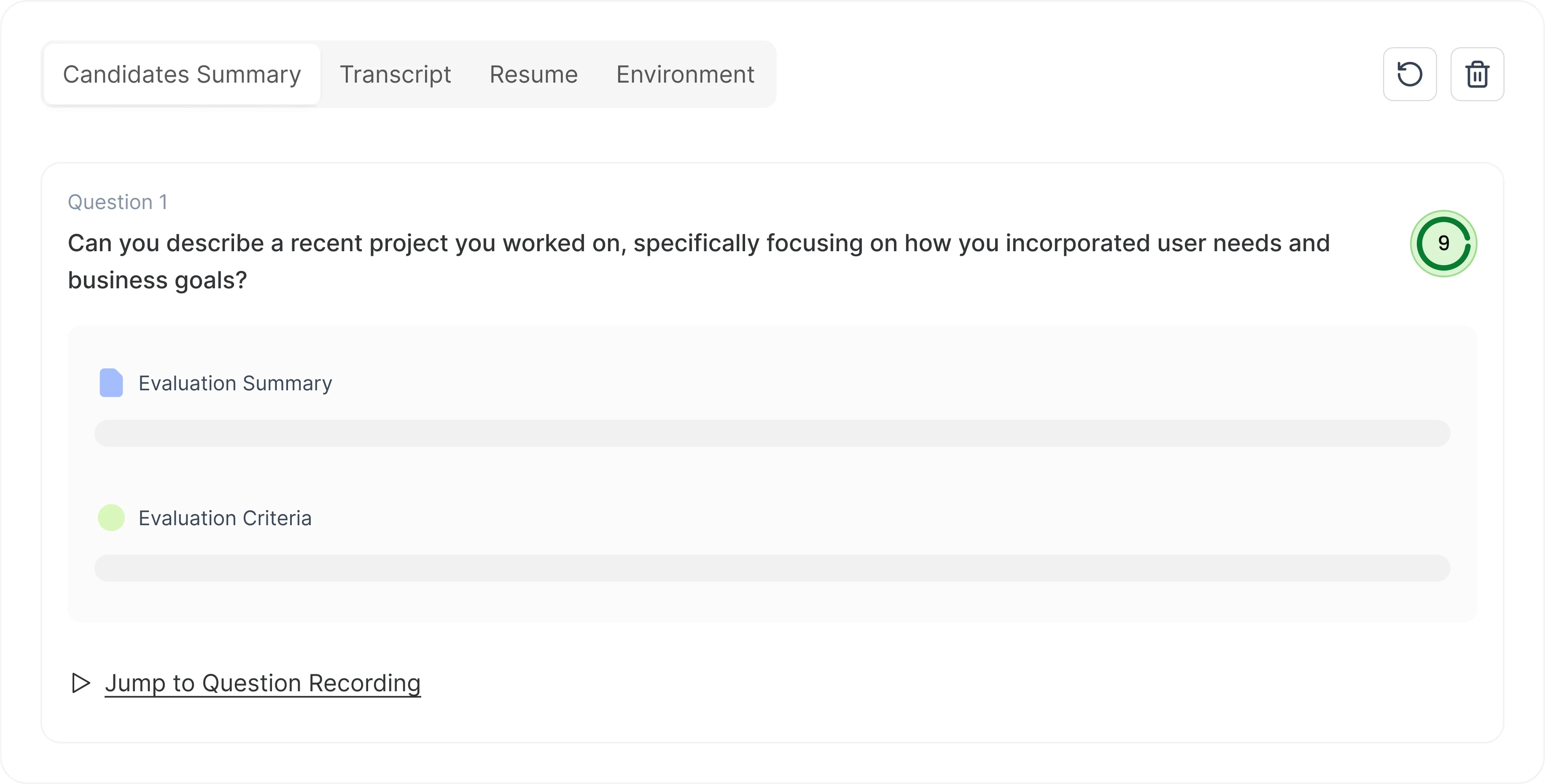
A full transcript and a per-question evaluation with the evidence quoted: every score points to the moment that earned it, alongside an overall score. Because every candidate answers within the same structured round, evaluations compare like for like.
The interviewer that never runs out of hours.
One teammate that speaks with every candidate at any hour, in any timezone, and hands your team the full transcript and evidence behind every score.
From role to reviewed interview, in three steps.
Your team owns the round end to end and can change it at any point: no consultants, no vendor tickets. We are your tech team, not your vendor.
Build the round
Reena drafts interview questions from the role, and your team edits, removes and approves: no candidate is asked anything you have not signed off.
Candidates interview any time
The interview is available around the clock in every timezone, so a shift worker in Riyadh and a graduate in Singapore both get their round this week, not next month.
Your team reviews
Interviewers open the transcript and the per-question evaluation, check the quoted evidence, and decide who moves forward. Any score can be overridden.
What first rounds look like after Reena.
Measured on client hiring, not benchmarks.
How do you trust an interview you didn't sit in?
Every interview carries integrity signals alongside the evaluation: Reena flags answers that sound scripted or read aloud, and notes environment and tampering signals during the session. Flags are information for your reviewer, not automatic rejections.
The signals are deliberately conservative: they exist so your reviewer knows where to look, not so software can disqualify anyone. Combined with the full transcript, they give a distributed team the confidence of having been in the room.
Scripted-answer check: clear. Session tampering: clear.
Environment: second voice detected at 12:40, marked for review. A human looks at the evidence before anything happens to the candidate.