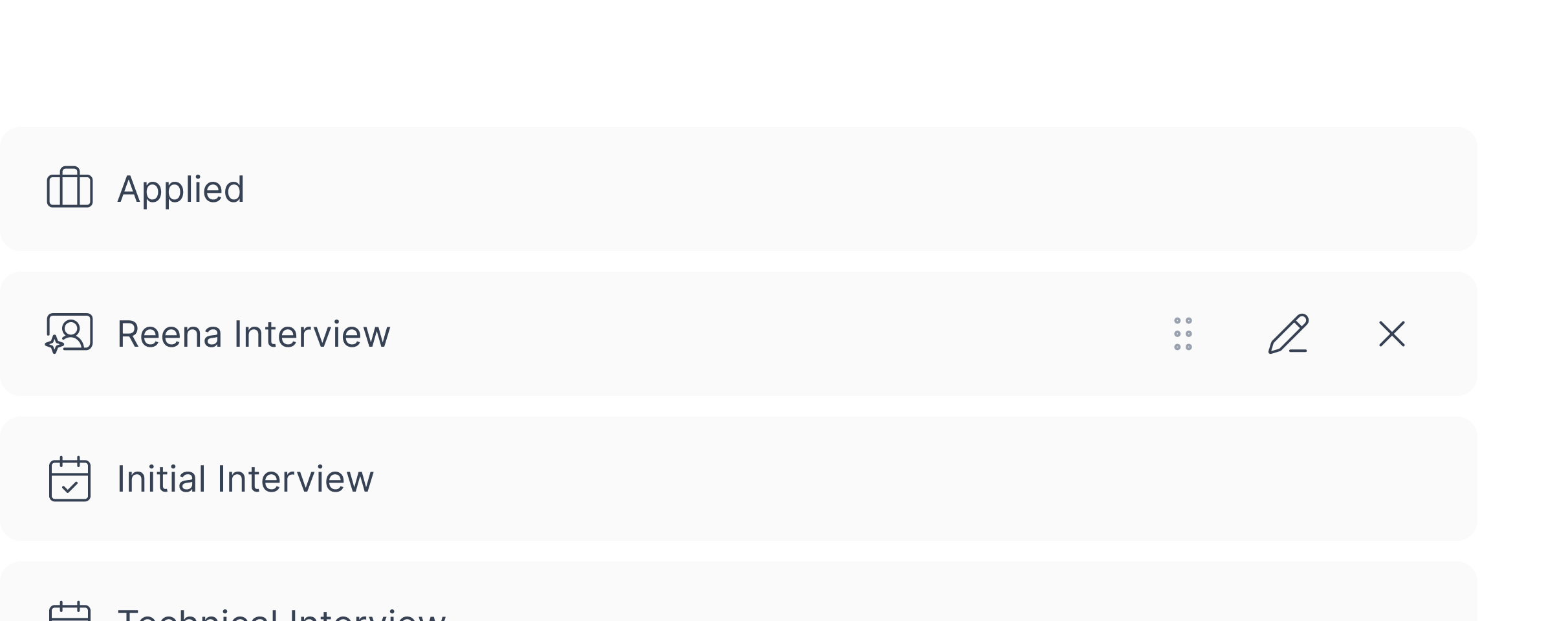
HR doesn't have a tools problem. It has a system problem.
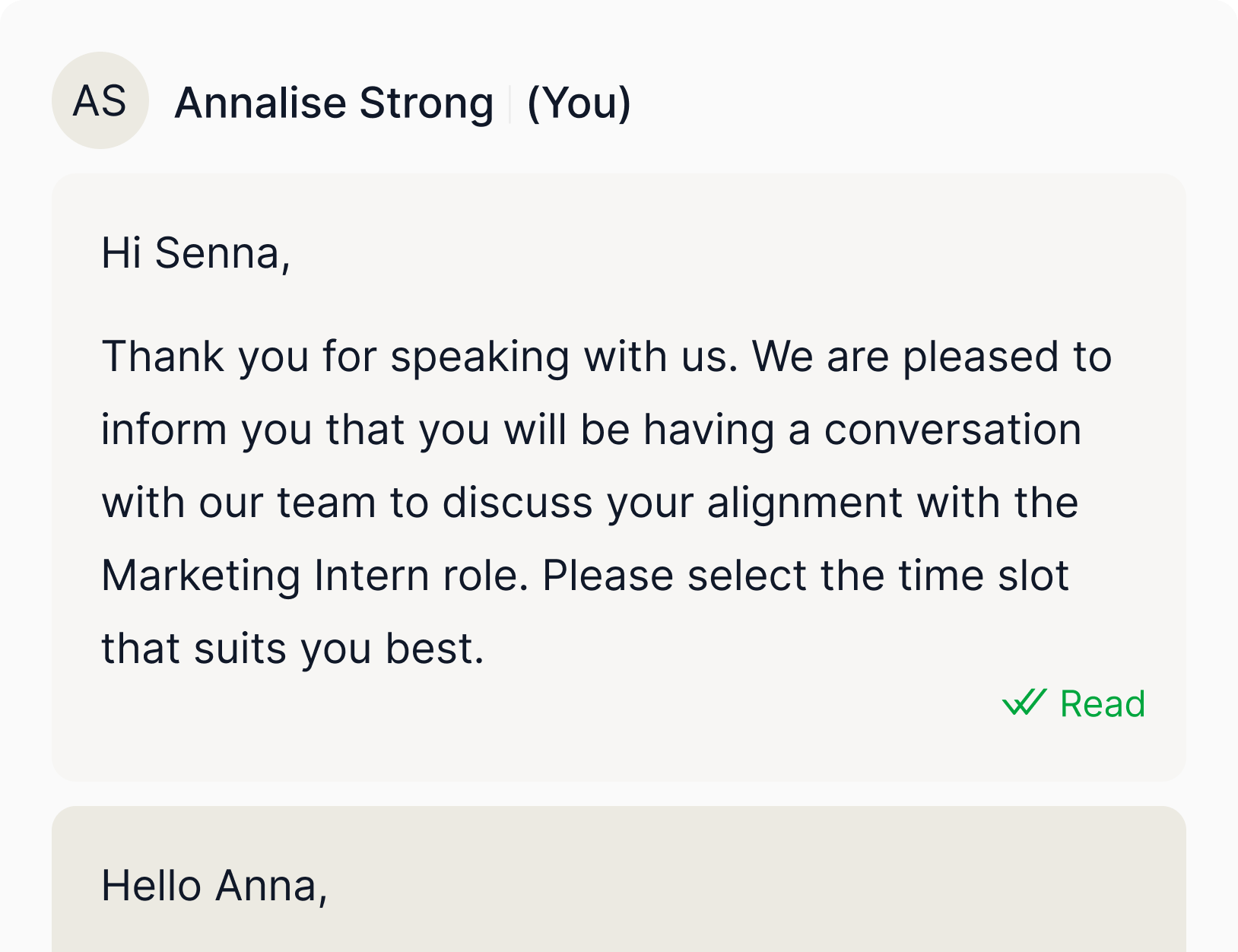
Reena runs the whole hire on one platform: applicant tracking, AI CV screening, AI interviews, scheduling, communications, native e-signature and HRIS records, connected so nothing falls in the gaps between tools. For the systems you keep, webhooks and an external API carry the data across, and your team works from one login and one candidate record.
What does a fragmented stack actually cost?
The visible cost is the invoices: an ATS here, a screening add-on there, a scheduling app, an e-signature subscription and a spreadsheet quietly acting as the system of record. The real cost is what happens between them: candidates fall in the gaps, data is retyped at every handover.
Each tool made sense when it was bought, and together they make a process nobody would design on purpose.
Three capabilities, one platform.
The mechanics behind trading five logins and five invoices for one.
What replaces the tool for every job
Applicant tracking, AI CV screening, AI interviews, scheduling, communications, native e-signature and HRIS records all share one candidate record, one login and one team. Nothing falls in the gaps between tools, because there are no gaps.
No separate e-signature subscription
E-signature is built into Reena: your team drags fields onto a template, invites the signer, and Reena verifies them with a one-time passcode before they sign. Every document returns signed with a full audit trail.
From a fragmented workflow to one system.
Thye Hua Kwan Moral Charities in Singapore replaced a manual, fragmented hiring workflow with structured pipelines, automated scheduling and built-in analytics on Reena.