Answers from your hiring data.
Ask Reena is two scoped assistants, not one all-knowing chatbot. Open a candidate and ask questions about that person, with every answer sourced from their CV, interview transcript, assessments, scorecards and notes. Questions about your whole pipeline go to a separate analytics agent, read-only and private to your team.
Ran seasonal support queues for two years, and two reviewers rate her consistent under pressure.
The answer exists. It's just buried in the file.
By the time a candidate reaches a final round, the truth about them is scattered across a CV, an interview transcript, assessment scores, scorecards and half a dozen notes. Before every call someone re-reads all of it, and under volume nobody has the time, so decisions start leaning on memory.
Open one candidate and ask Reena a question about that person, in plain language, and it answers from their own record. Every answer shows where it came from, so a recruiter can check the evidence rather than trust a summary.
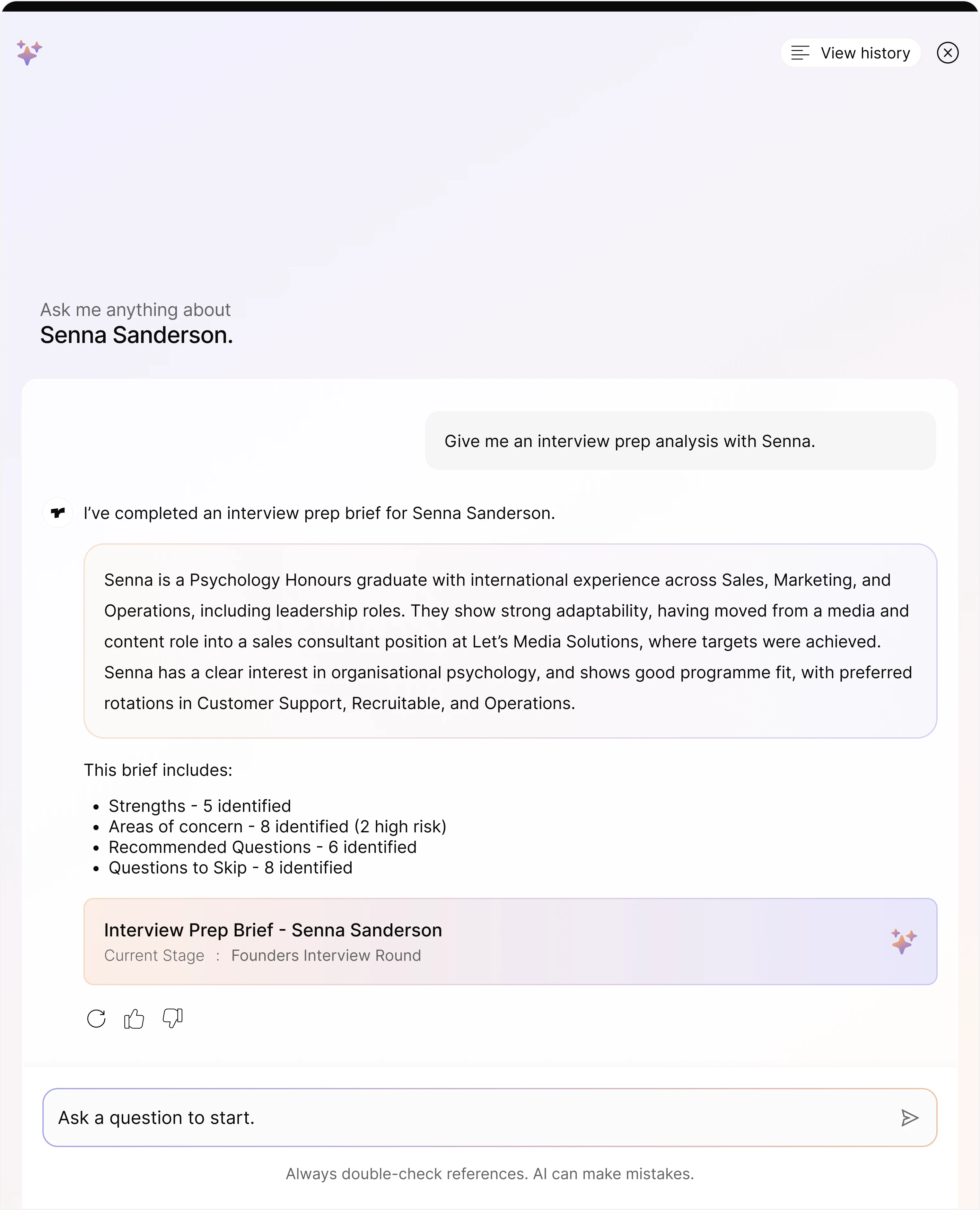
Ask about one person, get a sourced answer.
Every conversation with Ask Reena's copilot is bound to the candidate you opened: it reads that person's CV, AI interview transcript, assessments, scorecards and notes, and nothing outside that record. Ask what you would ask a colleague who had read everything, because Reena has.
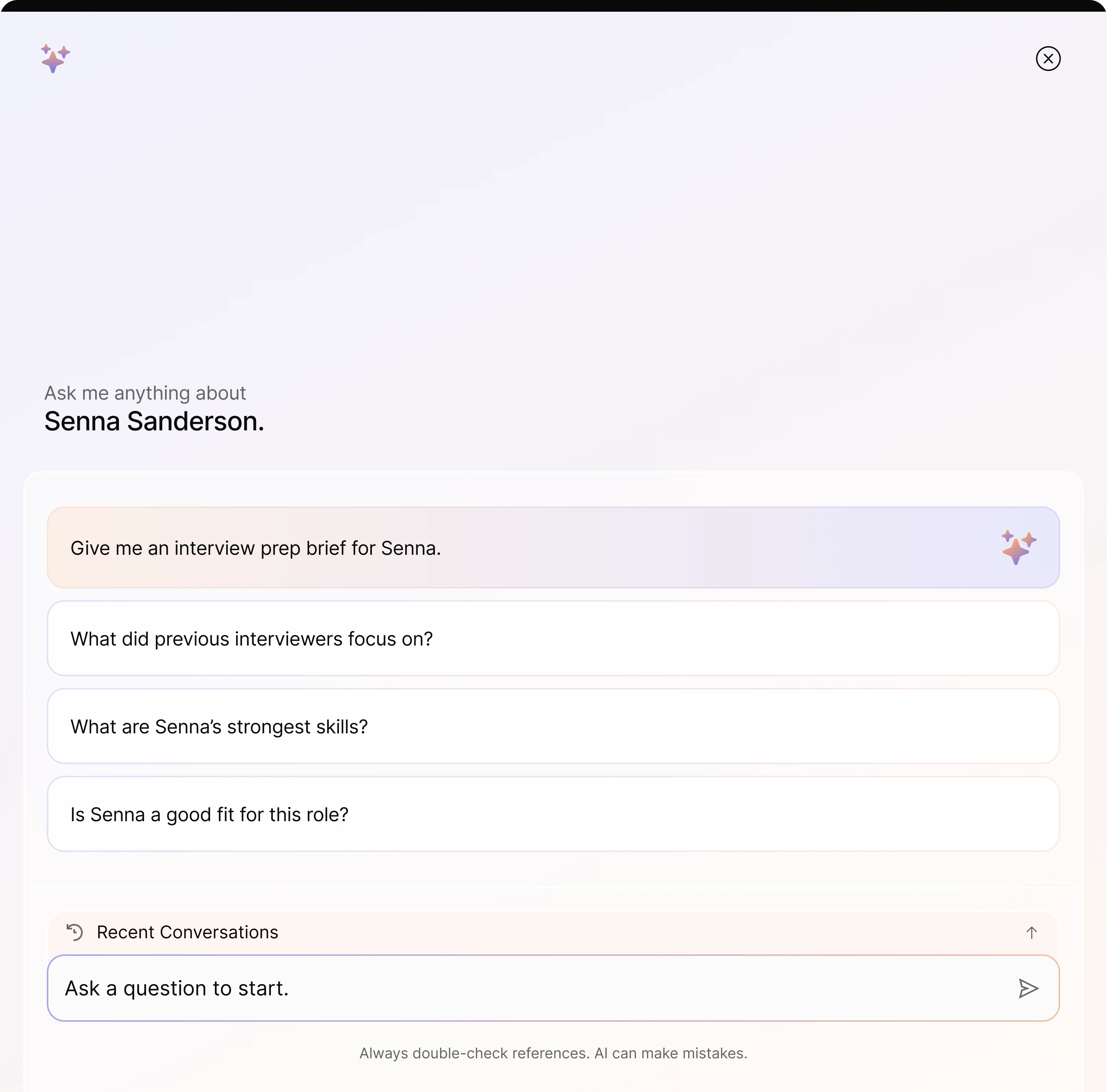
The teammate that already read the file.
Open any candidate and Ask Reena has the CV, the interview transcript, the assessments, the scorecards and the notes ready before you finish typing the question.
From an open candidate to a sourced answer.
The scope never widens on its own: your team opens the candidate, so the conversation is always about that one person.
Open a candidate
From any stage in the pipeline, open the person you want to ask about. The conversation is scoped to that record from the first question.
Ask, in plain language
Ask what you would ask a colleague who had read everything: a strength, a risk, a comparison with someone else already on file.
Get a sourced answer
Reena answers from that candidate's CV, transcript, assessments, scorecards and notes, with the source shown, or exports it as a brief for the interviewer.
A question about all of them needs a different agent.
Aggregate questions about your whole pipeline are a separate, read-only capability, tenant-scoped to your organisation. It is never the candidate copilot above, and it never changes your data.
Ask where every candidate sits right now, by role and stage, and get an answer instead of a spreadsheet.
See how each stage converts and how long roles really take, from opening to offer.
Thye Hua Kwan Moral Charities uses this layer for real-time visibility into time-to-hire and funnel performance across its teams.
Interviewers walk in already briefed.
Reena generates an interview brief for each interviewer before the conversation: a short, evidence-backed summary of who the candidate is, what earlier stages established and what is still worth probing, drawn from the same sourced record the copilot reads.
Hiring managers stop opening interviews with "remind me who this is", and the forty-five minutes get spent on the questions only a human can ask.
Explore AI Interviews →Summary from CV and screening. Ready before the call starts.
3 strengths sourced, 2 open questions flagged. Exported as a PDF for whoever needs it.