Every applicant remembers the experience.
Candidate experience is what every applicant feels moving through your hiring, from the first click on a careers page to the final answer. At volume it usually frays: people apply into silence and never learn where they stand. Reena keeps every candidate informed through a branded portal, automated stage updates, fast AI screening, and surveys that measure how the process actually felt.
What does a broken candidate experience cost you?
A broken candidate experience costs you the goodwill of everyone you did not hire. At volume the arithmetic turns harsh: when two thousand people apply and only a shortlist ever hears back, a single hiring round quietly produces hundreds of people who think less of your company than before they applied, and many of them are also your customers.
Most candidates who are ghosted will not apply to you again. The fix is structural, not motivational: on a fragmented stack a reply depends on a recruiter remembering to send it, and at scale nobody can remember every time.
How does every candidate know where they stand?
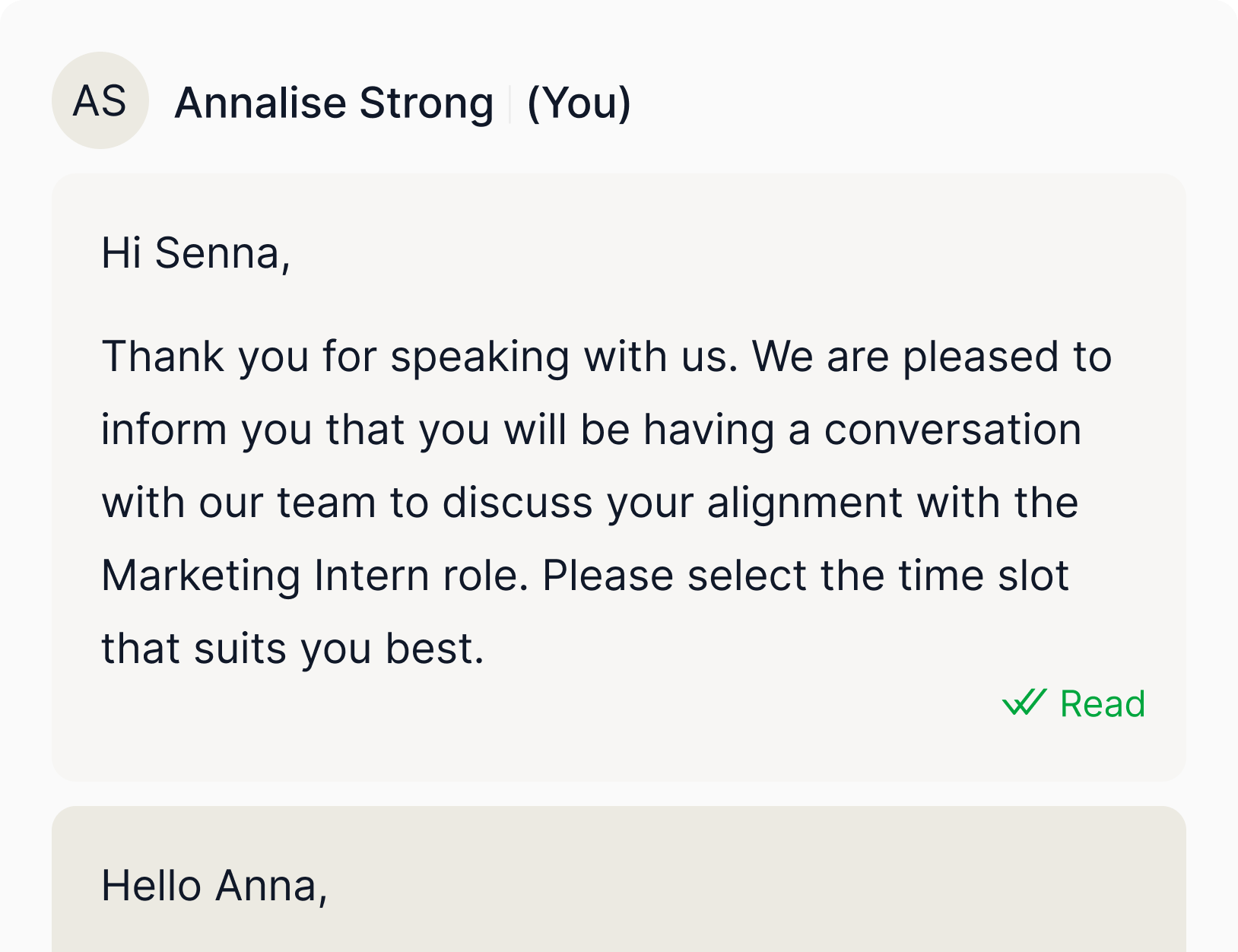
Every candidate knows where they stand because their status lives in one place: a branded portal with messages threaded beside the application they concern. Automated updates go out when a stage changes, on the triggers, delays and timezones your team sets, from a sender carrying your domain, and delivery status is tracked so you know what actually arrived.
Your team works from a unified inbox with open, closed and resolved states, so a candidate's question becomes a task someone owns rather than an email nobody saw. The words stay yours: you write the templates, and placeholders fill in the candidate, role and stage.
Stage update. You are through to interview. Pick a time that suits you and we will confirm it straight away.
"I always knew exactly where I stood. That is rarer than it should be."
How fast do candidates hear back?
Candidates hear back faster because the slow parts are automated. AI CV screening reads every application within minutes of it arriving and shows the reasoning behind each ranking, so a shortlist can form the same day instead of a fortnight later. Interview scheduling then removes the back-and-forth: candidates pick from times that already fit your team's calendars.
Speed is the part of candidate experience people feel first. A reply that comes in hours rather than weeks tells an applicant they matter, before a single word of the message is read.
Is every candidate judged the same way?
Every candidate is judged against the same structured criteria, so the outcome reflects the role rather than who happened to read the CV. Reena's AI applies your screening and interview criteria consistently across the whole pipeline and shows the reasoning behind each ranking, which means a decision can be checked rather than taken on trust.
The AI recommends; your team decides. Recruiters can override any ranking, and human oversight stays on every consequential call, so consistency and judgement work together instead of pulling against each other.
How do you know how the process felt?
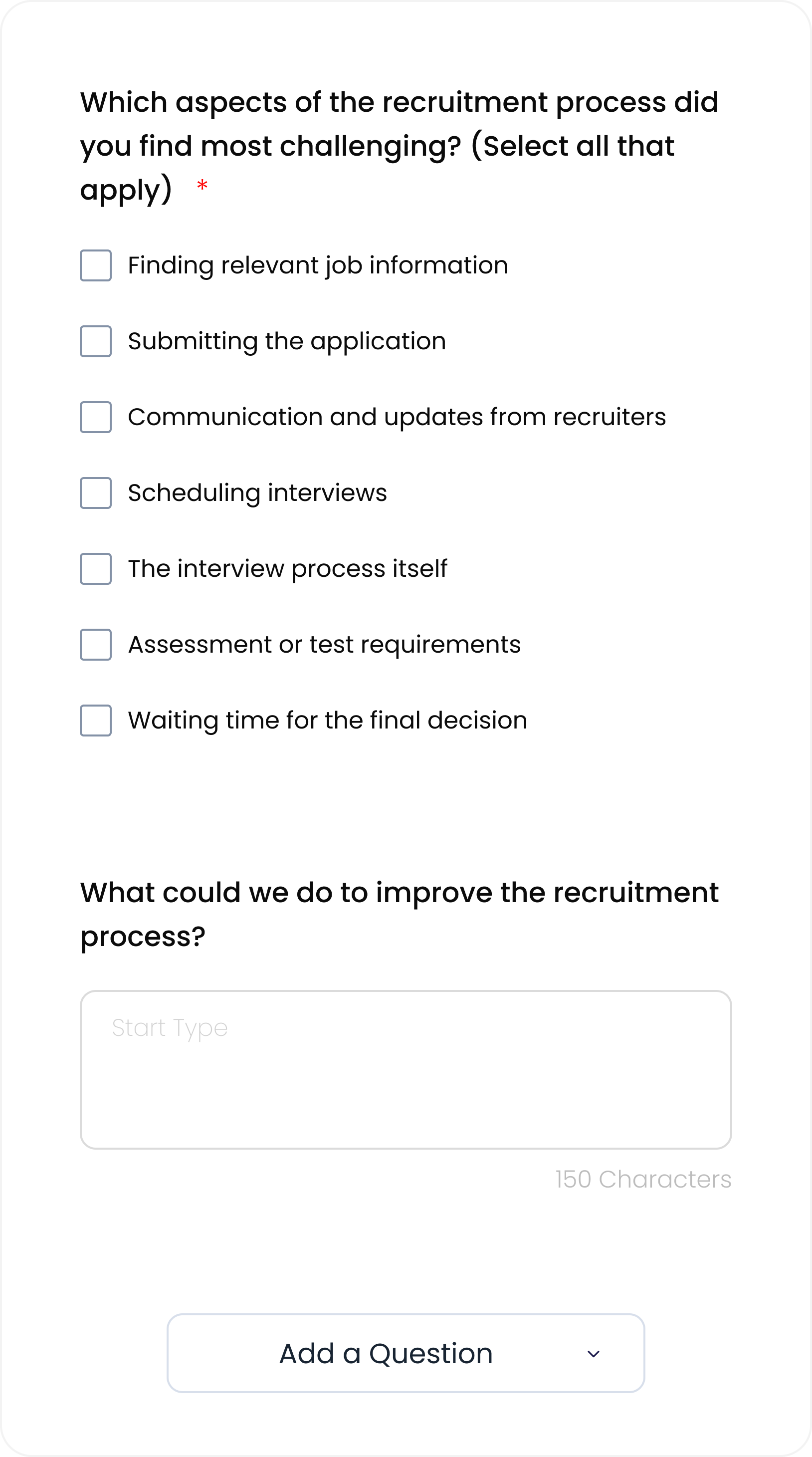
You know how the process felt by asking. Candidate experience surveys go out by email campaign at the moments you choose, and response analytics show where the process works and where it grates. Because the findings reach the team that can change it, how the process feels stops being a guess and becomes something you measure.
The same surveys module runs employee questionnaires too, so the listening that starts in hiring can carry on after the start date.
Candidate experience, measured.
CNTXT AI in the UAE measured engagement across its candidate pool, Misk Foundation in Saudi Arabia runs more than 10,000 applicants per intake through one hub, and THKMC in Singapore automated its candidate communication and engagement workflows on the same platform.