The AI-based ATS: one pipeline, every role.
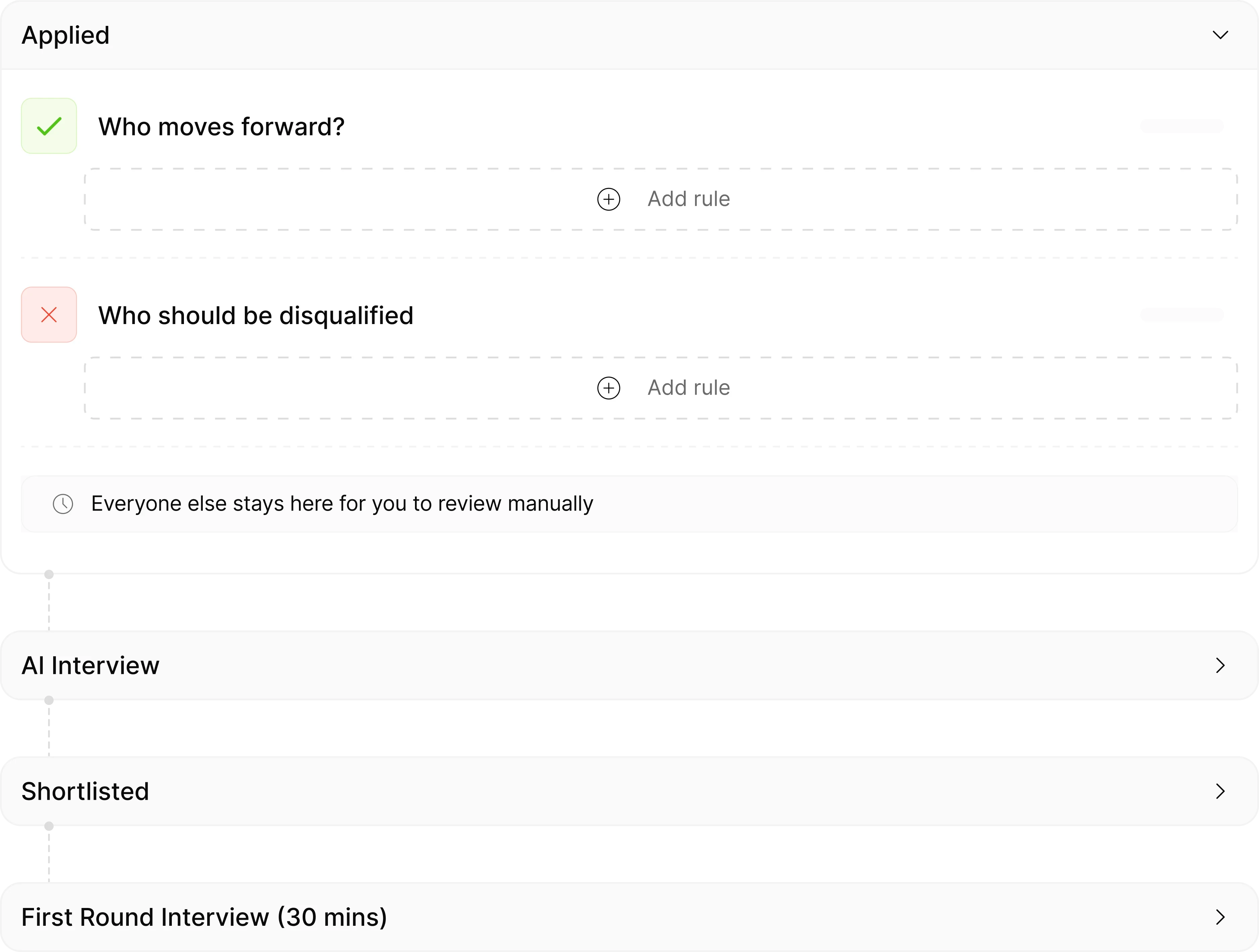
Your team sets the stages, works stage-filtered lists, and moves candidates in bulk, while every applicant who does not get the offer lands in a searchable talent pool for the next one.
312 shortlisted. Reena surfaced the strongest matches and showed the signals behind each one.
How do a hundred open roles stay in order?
Give each one a pipeline shaped for it: a role, a programme, a seven-stage graduate scheme. Stage-filtered lists show exactly who is waiting where, with nothing buried in a spreadsheet.
The work that eats the afternoon happens in bulk. Move forty-five, qualify a batch, tag a group, or export a stage to CSV. Duplicate detection means the same person never appears in your pipeline twice.
Where the hiring team reaches a decision.
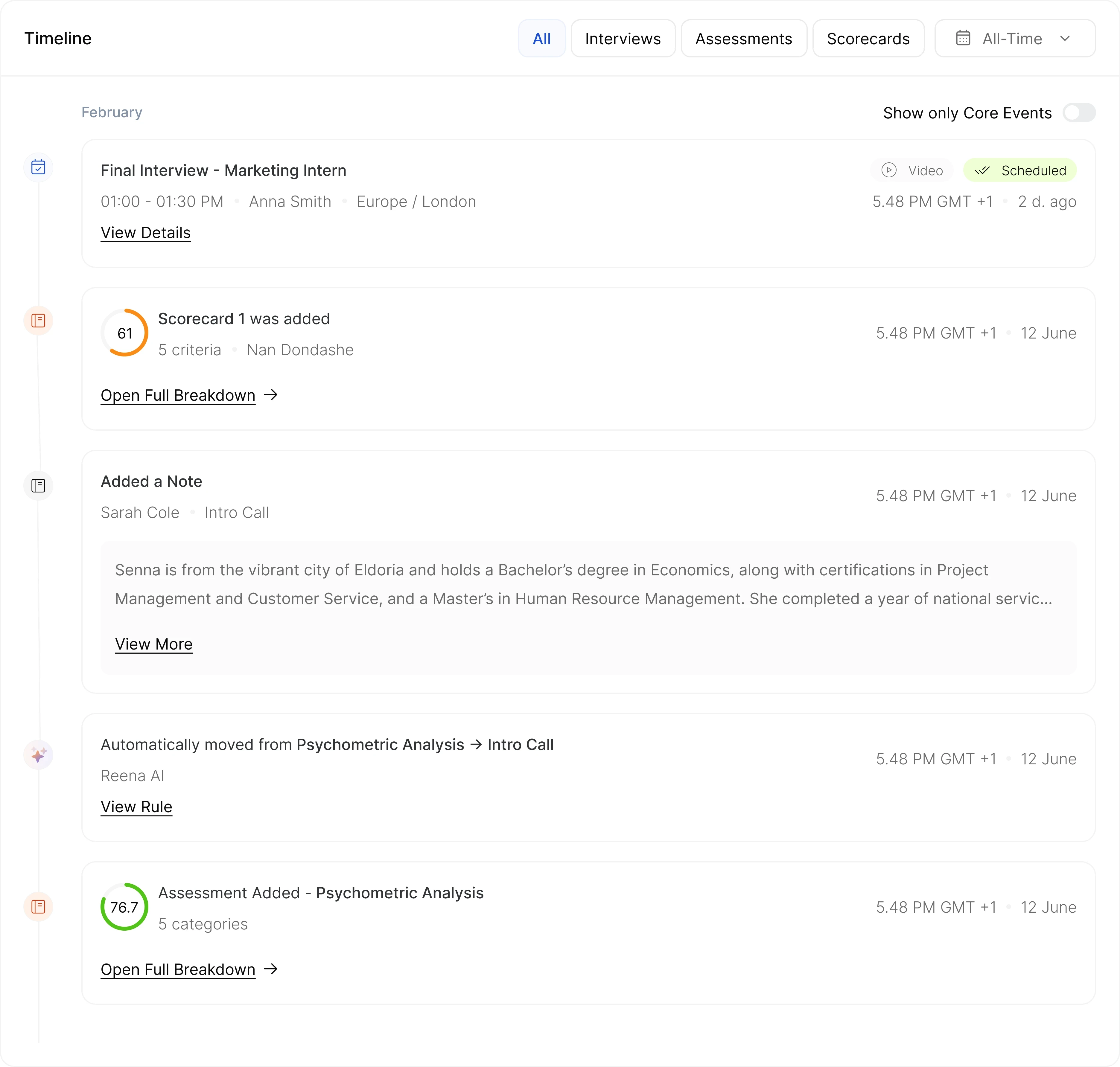
Inside the candidate record, where the evidence already is. Interviewers score against structured scorecards, notes stay on the record, and the audit log keeps every action for the day compliance asks.
The AI teammate with full context.
One teammate that has read every CV, every scorecard and every note on the role, working beside your team at every step of the hire.
From headcount request to first applicant.
Opening a role is a workflow of its own, and your team runs the whole of it inside Reena, changing it whenever the business changes. We are your tech team, not your vendor.
Approve the role
A requisition moves through the approvers you define, with the headcount, the review history and any changes kept on the record before the role opens.
Publish once
Build the role on your careers page, then push it to job boards. Hired and offered too late in the day? The built-in multiposting reaches them.
See what worked
Source attribution tags every applicant with the channel that brought them, so the next posting spend follows the channels that produced hires, not just volume.
Automation is only as good as the evidence it runs on.
Rules act on scores that can defend themselves: the AI CV screening score arrives with its reasoning shown, assessments report against thresholds your team chose, and AI interview evaluations quote the candidate's own answers as evidence.
What one pipeline does to the numbers.
Measured on client hiring, not benchmarks. Figures are indicative until verified with each client.
What happens to everyone you don't hire?
They become your fastest source for the next role. Every candidate stays in the talent pool with their history, tags and evaluations attached, and your team searches it in plain language.
Ask for warehouse supervisors with cold-chain experience who reached final rounds, and Reena finds them by meaning, not exact words. The search is AI. The shortlist is yours.
Explore AI CV Screening →"Warehouse supervisors with cold-chain experience who reached final rounds."